 blog
How to Choose Durable Nonstick Pans for Home Cooking in 2026
Quick Summary
Durable nonstick pans depend on three things: the coating type, a thick multi-layer base, and careful everyday use. Traditional PTFE gives the slickest release but thins under metal utensils and high heat, while ceramic resists scratches but is more brittle. Choosing the right coating and caring for it with silicone utensils and medium heat helps a pan last.
- Durability depends on the coating, the base construction and everyday habits.
- PTFE releases food best when new but thins from metal utensils and high heat.
- Ceramic resists utensil scratches better but loses release faster under sustained heat.
- Use silicone, nylon or wood utensils and keep heat at medium or below.
- Replace a pan when the coating flakes, food sticks despite proper heat, or the base warps.
Table of Contents
- What Makes a Nonstick Pan Durable for Everyday Cooking
- Ceramic vs. Traditional Nonstick Pans: Which Holds Up Better
- How We Tested and What the Published Reviews Found
- The Best Nonstick Frying Pan for Home Cooks, by Use Case
- How to Care for Nonstick Pans So They Last
- How Long a Nonstick Pan Lasts and When to Replace It
- Choosing Your Next Durable Pan at Home Pro Kitchen Supply
- Frequently Asked Questions
What Makes a Nonstick Pan Durable for Everyday Cooking
Durability in a nonstick pan comes down to three things: the coating, the base and the everyday habits that wear both down, and choosing among durable nonstick pans starts with understanding all three. Most pans fail because the coating breaks down long before the metal does. Knowing what to look for before you buy saves money and frustration.
Nonstick is one of the best-selling pan types. Nonstick is one of the best-selling pan types, which is why the category is so crowded and why the claims on the box vary so widely. Consumer Reports guide to frying pans that avoid PFAS chemicals
Coating type: PTFE versus ceramic
Most nonstick pans use a PTFE-based coating, while others use a ceramic finish. PTFE is the traditional option and is known for easy food release. Ceramic coatings are marketed around avoiding PFAS chemicals, which is why many shoppers now compare the two directly.
Durability claims vary by brand. T-fal describes its Platinum coating as 10 times more durable than basic nonstick, and All-Clad positions its NS Pro Ceramic line as built for durability and food release. Treat these as manufacturer claims, not independent test results.
Base construction and heat distribution
The base matters as much as the coating. A thin base heats unevenly, which creates hot spots that wear coatings faster, so the best durable nonstick pans use a thicker, multi-layer base. A thicker, multi-layer base spreads heat more evenly and holds up better to daily use on a range.
Ceramic vs. Traditional Nonstick Pans: Which Holds Up Better
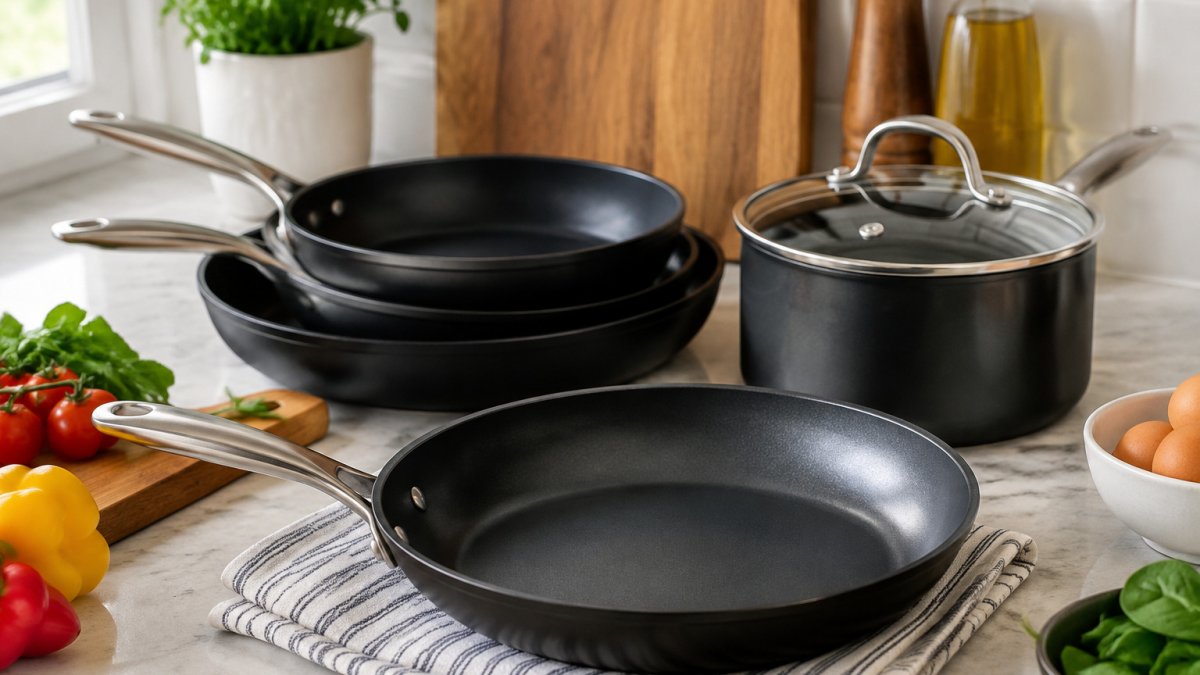
Traditional PTFE nonstick pans release food most easily when new, but their coating can wear over time. Ceramic pans appeal to shoppers who want to avoid PFAS, though their release performance also declines with use. The two coatings fail in different ways, and understanding those failure modes is the key to picking a pan that lasts.
How each coating wears
PTFE is a soft polymer applied in layers over a primed metal base. It delivers the slickest release of any coating when new, which is why it dominates the category. Its weakness is mechanical: metal utensils, abrasive scrubbers, stacking without protection and repeated high heat all thin the coating. Once the top layer is compromised, release degrades quickly and the pan begins to stick in patches.
Ceramic coatings are silica-based and marketed as PFAS-free. They are harder than PTFE and resist scratching from utensils better, but they are more brittle. Ceramic loses its release properties faster under sustained heat and tends to degrade across the whole cooking surface rather than in isolated patches. Ceramic also stains more readily and can discolor from high heat.
What the durability claims actually mean
Manufacturer durability claims are not standardized. T-fal describes its Platinum coating as 10 times more durable than basic nonstick, and All-Clad positions its NS Pro Ceramic line as built for durability and food release. Treat these as manufacturer claims, not independent test results.
Matching the coating to how you cook
If you want the easiest release and cook eggs and delicate foods often, PTFE remains the more forgiving choice, provided you use silicone, nylon or wood utensils and keep heat at medium or below. If avoiding PFAS is a priority and you accept a shorter release window, ceramic is the practical option. If long-term durability matters more than nonstick release, uncoated materials are the better investment: Uncoated materials such as carbon steel, cast iron or stainless steel are often considered better choices for long-term durability. Organic Authority cookware durability recommendations Viking notes that nonstick-coated pans are easier to use, but that the coating may wear over time.
Watch out: a pan advertised as "ceramic" may be a ceramic-reinforced PTFE coating rather than a true PFAS-free ceramic. Check the manufacturer's materials disclosure rather than the marketing name.
For a non-coated alternative, our stainless steel frying pans guide walks through the options.
The two coatings wear out in different ways, so the table below sets out where each one tends to fail.
| Coating | Strength | Weakness |
|---|---|---|
| PTFE (traditional) | Slickest release when new | Thins from metal utensils, abrasives and high heat |
| Ceramic (silica-based) | Harder, resists utensil scratches better | More brittle; loses release faster under sustained heat |
| Ceramic (PFAS-free marketing) | Avoids PFAS chemicals | Stains and discolours from high heat |
| Uncoated (carbon steel, cast iron, stainless) | Often considered better for long-term durability | Less nonstick release |
How We Tested and What the Published Reviews Found
We did not run our own lab tests for this guide. Instead, we reviewed published testing from established cookware reviewers and compared what they found, then translated their results into the durability questions that matter for everyday home cooking.
What the published reviews measured
Wirecutter recommends the Tramontina 10-Inch Professional as a slick, durable option. Wirecutter's guide to the best nonstick pans
Across these reviews, the recurring themes are cooking performance with eggs and pancakes, ease of cleaning, handle comfort and how well the coating holds up. Published test lengths and conditions vary, so check each review's methodology before relying on any single verdict.
The durability gap in published testing
Most published reviews test pans when they are new or after a short series of cooking sessions. That tells you how a pan performs out of the box, not how it will perform after a year of daily eggs. When you read a review, look for whether the tester states how many sessions the pan went through, what heat levels were used, whether the dishwasher was involved and what utensils touched the surface. A review that says a pan "held up well" without those details is telling you less than it appears to.
How to read a durability claim like a tester
A few practical checks separate useful testing from marketing. First, look for the number of pans tested and the length of the test window. Second, look for whether the tester measured release performance at the start and end of the period rather than only at the start. Third, look for whether the pan was cleaned by hand or in a dishwasher, since dishwasher detergent and heat are among the fastest ways to degrade a coating. Fourth, look for whether the tester used metal utensils, which is the most common real-world cause of coating failure.
Watch out: a review that ranks a pan highly after a few weeks of use may still be describing a pan that will stick within a year under heavy daily cooking. Treat short test windows as a measure of new-pan performance, not durability.
What this means for your buying decision
Because long-term data is scarce, the most reliable approach is to combine published short-term results with the construction details that predict wear: coating type, number of coating layers, base thickness and the manufacturer's care guidance. A pan that scores well in new-pan tests and also has a thick, multi-layer base and clear care instructions is the safer bet for durability. Our use-case recommendations below apply that logic to common home-cooking situations.
The Best Nonstick Frying Pan for Home Cooks, by Use Case
The right pan depends on how you cook. A single skillet for eggs has different needs than a large pan for family dinners.
For everyday cooking in a small kitchen: Choose a 10- to 11-inch pan. It handles eggs and pancakes well and fits most storage spaces. The 11.8-inch stainless steel fry pan with a nonstick interior from Home Pro Kitchen Supply is a practical option for this use.
For larger batches or a bigger household: A 14-inch pan gives you more cooking surface. The 14.2-inch heavy-duty nonstick fry pan from Home Pro Kitchen Supply suits cooks who regularly make large meals.
Pros and cons to weigh:
- Larger pans are heavier and harder to store
- Smaller pans wear out faster when used for big batches
- Heavier-gauge bases hold heat better but cost more
Pricing depends on size, construction and the brand you choose. Check current prices on our site before you buy.
How to Care for Nonstick Pans So They Last
Care habits affect coating life more than most buyers expect. Start with the utensils. Metal utensils scratch nonstick surfaces, so use silicone, nylon or wood instead. A heat-resistant silicone spatula turner keeps the coating intact during cooking.
Watch out: high heat empties the coating's performance quickly. Keep the burner at medium or lower for most nonstick cooking, and never preheat an empty pan.
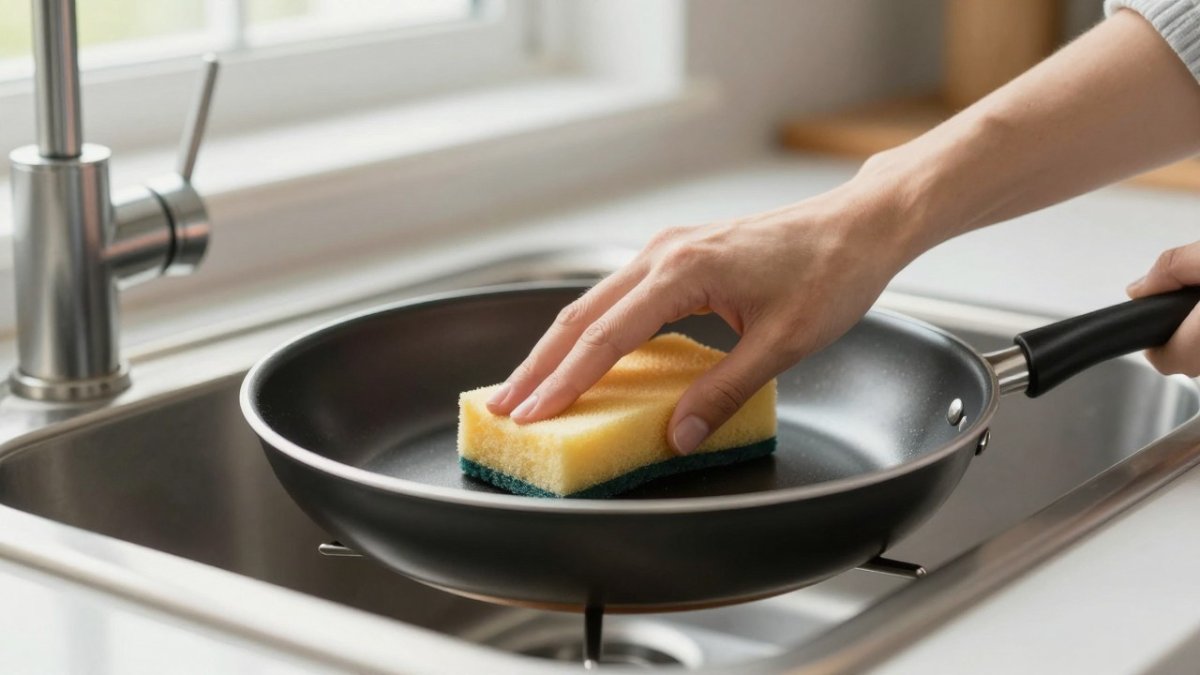
Wash the pan by hand with a soft sponge and mild dish soap. Let it cool before rinsing, since thermal shock can damage the coating. Store pans with a cloth or pan protector between them to prevent scratches. A set of heat-resistant silicone spatulas that won't scrape the surface is useful for this too.
How Long a Nonstick Pan Lasts and When to Replace It
Nonstick pan lifespan depends on use, cleaning habits and coating type. Heavy daily cooking generally wears a coating faster than occasional use.
Replace the pan when you see flaking or peeling, when food sticks despite proper oil and heat, or when the base has warped and no longer sits flat on the burner. A warped base causes uneven heating, which accelerates wear on everything else.
Replacing a worn pan on time helps keep your cooking consistent.
Choosing Your Next Durable Pan at Home Pro Kitchen Supply
Start with how you cook most often, then choose the size, the coating type and the base construction that fit that routine. Compare the manufacturer's care guidance with how you actually clean your pans.
Browse the range, read the product details and shop now to find the right pan for your kitchen.
Frequently Asked Questions
Which nonstick pan is the most durable for everyday cooking?
For everyday cooking, look for a heavier base with a thick aluminum core and a reinforced coating rather than the thinnest, cheapest option. Wirecutter recommends the Tramontina 10-Inch Professional as a durable option. Durability also depends on how you use it: medium heat, wooden or silicone utensils, and hand washing extend coating life considerably. Check the manufacturer's warranty as a rough signal of expected longevity before you buy.
Are ceramic or traditional nonstick pans more durable?
Neither type is universally more durable. Traditional PTFE coatings release food very easily and tolerate moderate heat well, but they can wear over time, especially with metal utensils or high heat. Ceramic coatings are often marketed as a PFAS-free alternative, though their slickness typically fades sooner with heavy use. Consumer Reports focuses its frying pan coverage on people seeking to avoid PFAS chemicals, so review those options alongside your own cooking habits.
How long should a nonstick pan last?
With careful use, a good nonstick pan often performs well for several years, but no published source in this research gives a verified lifespan figure, so treat any specific number with caution. Replace a pan when the coating flakes, food sticks consistently despite proper oil use, or the base warps and rocks on the burner. Avoiding overheating and metal utensils is the single most effective way to extend its life.
Can you use metal utensils on a nonstick pan?
Metal utensils can scratch and wear through nonstick coatings over time, so silicone, nylon, or wooden tools are the safer choice. Many manufacturers, including All-Clad with its NS Pro Ceramic line, design coatings for durability, but scratching still shortens coating life. Choosing softer utensils is a low-cost habit that preserves food release across years of home cooking.